Showing posts with label chemical composition. Show all posts

Monday, November 16, 2015

Unit test Reflection

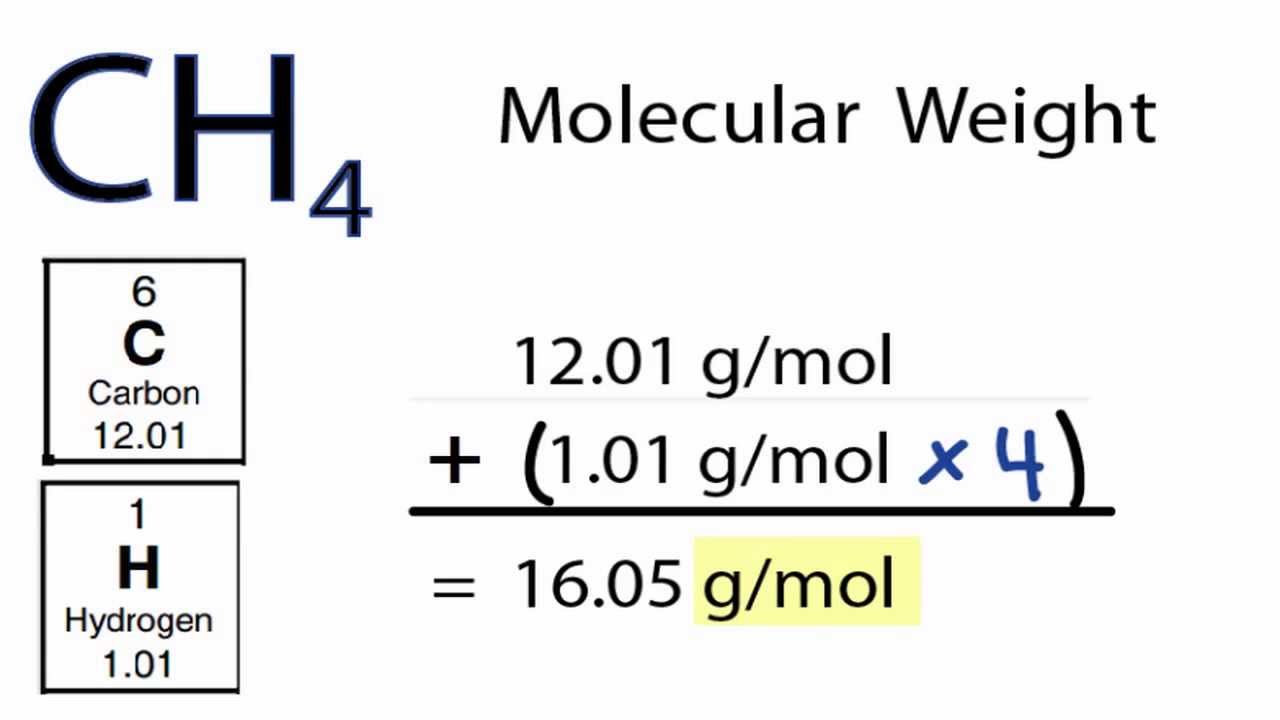
Today in class we took our exam over the entire chemical composition unit. There were 36 questions on the quiz, and although the material wasn't necessarily hard with all the practice I had done, it was still difficult to finish in time.The unit was mainly surrounded around moles, with conversions and using them in problems. The test included things such as empirical and molecular formulas with complex problems, mole road map conversions, molar mass, where you add up the periodic table masses, percent composition problems, and hydrated compounds. I did not do as well on the quiz, so here are some links that I used to help prepare myself:
Hydrated Compound Practice Problems: http://www.chemteam.info/Mole/Determine-formula-of-hydrate.html
Empirical formula help:http://www.chemteam.info/Mole/EmpiricalFormula.html
Molar mass explanation and quiz: http://www.softschools.com/quizzes/chemistry/molar_mass/quiz1120.html
Molar mass sample:

https://i.ytimg.com/vi/L4y8-x9ww_A/maxresdefault.jpg


Thursday, November 12, 2015

Formula of a Chloride Lab

Today, we conducted a lab in class where we attempted to determine the formula of the compound zinc chloride by measuring the variety of masses when zinc reacts with hydrochloric acid. During the experiment, we had to measure the beaker, then add a pellet of zinc and remeasure the mass. Once this was done, we measured out 10mL of 3M HCl and added it to the beaker with the zinc. Once our partner group was ready, we placed our mixture on the hot plate and turned the heat up to around 7-8. We had to wait a while, and the reaction was done when there was little to none liquid left in the beaker. Once it was at this stage, we took it off the hot plate and let it cool off before recording the final mass. We used these three masses then to determine the empirical formula.
Here are some pictures from our experiment and my notecard of all our final calculations with the work!


here is a basic video on the procedure, just on a larger scale! 


Wednesday, November 11, 2015

Empirical Formulas

Today in class we learned about empirical and molecular formulas. There are a few key differences between the two including the empirical formula has the lowest whole number ratio and it cannot be reduced, where the molecular formula can have a reduction. It is also important to remember that the molecular formula can be the empirical formula. We learned how to find the empirical formula when you're given the percent composition of each element in the compound. When you are given this, you simply convert each percent first into grams (it will be the same exact number) then use the atomic number off of the periodic table to then convert it to moles. Once it has been converted into moles, then you will divide both numbers by the smaller number. If there happens to be a decimal, that decimal will be multiplied to reach a whole number. Remember to multiply the other numbers also by the whole number that got you to that whole from the decimal.
Here is an example of how these conversions are done!
https://www.chem.tamu.edu/class/majors/tutorialnotefiles/emp2d.gif

Thursday, November 5, 2015

Moles and Molar Mass

The past two days we have gotten started on our new unit. The first day we focused on what a mole is, that being a quantity of measurement and shown as 6.02x 10^23 representative particles. We have walked through the steps of converting between grams, volume, and mass, ultimately with moles in the middle of this action. Here is the chart that will show this process. You use this chart as essentially conversion factors to get to where you want. On the second day we were introduced to this process with compounds rather than just one element. The difference with that process is that the atomic mass must me multiplied by the amount there are. For example, C3H8 would have to multiple the atomic mass of carbon by 3 and hydrogen by 8.
 

Here is a video I found explaining the road map: http://m.youtube.com/watch?v=mBVL0PHPrhg

Tuesday, November 3, 2015

Pre-Test

Monday in class we took the entire period doing a pre-test for our upcoming unit. To be honest, I was completely lost during the entire test and I didn't know how to solve any of the problems. Most of the problems were numerical, so if I didn't know the formulas of how to figure them out, I had to guess. I did some research and found some websites to help going into this unit.
This link will help with basic understanding when just starting to dig in:
http://easyscienceforkids.com/chemical-composition/
This link goes more in depth of empirical formulas and how to do the calculations:
http://pages.towson.edu/ladon/empiric.html
Here's a picture of how working out empirical formulas will look:
http://web.tenafly.k12.nj.us/~shilfstein/emp1c.gif